

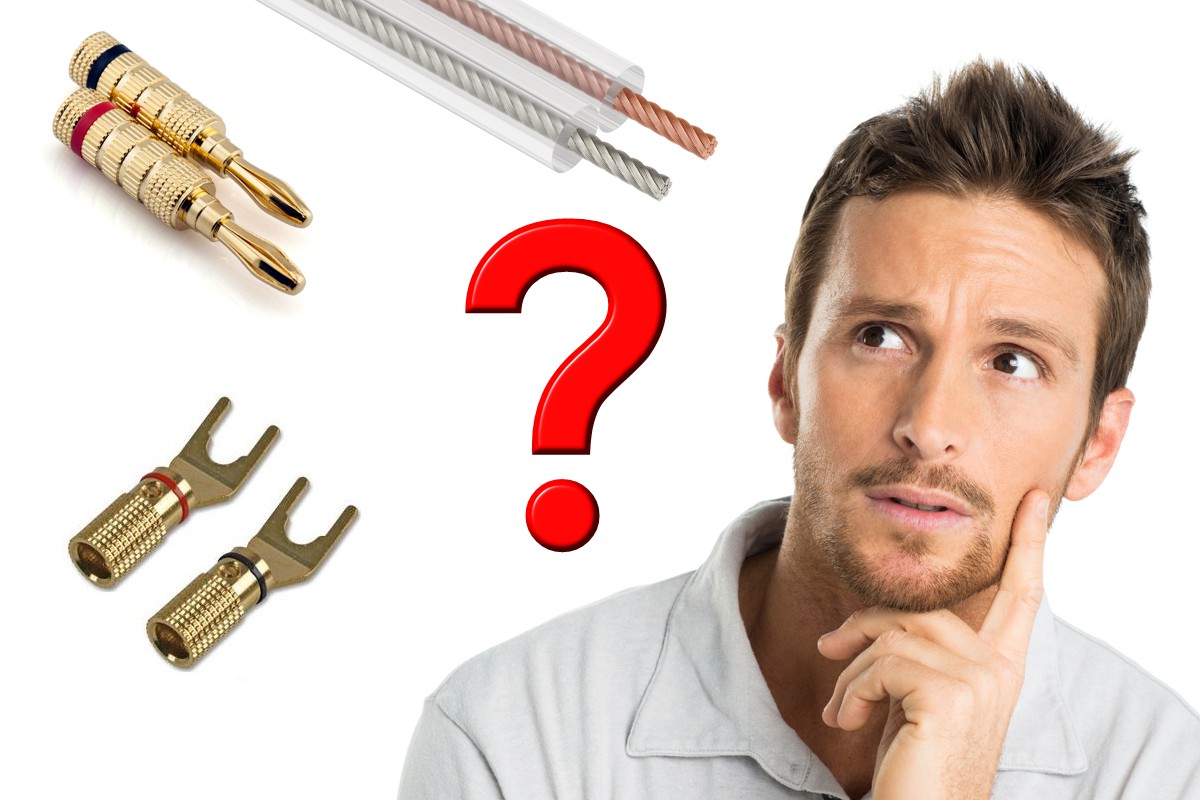
Is it better to end with bananas, spades or to leave the cable skinned? This is one of the questions that customers ask us most frequently. Each solution has its advantages and disadvantages, which we will tell you about in this new article in our blog. One thing must be said, however: our discussion makes sense as long as the connections are applied to high-quality equipment and the materials used are of a high standard. For example, a pure copper banana will be better than a brass one. So let's take stock of what is the best solution between bananas, spades and stripped cable.
The Speaker Hi-Fi cable terminated with bananas
The banana connection is undoubtedly the most common, as it provides the greatest convenience and excellent protection from oxidation of the conductor. There are various types of banana on the market, the most common being those with springs on the pin. This type of banana is the least efficient because of the spring component, which affects the stability and intensity of the force applied to the contact (see photo).
Another popular type of banana (we use it in all series except Invictus) is the BFA banana, which is characterised by a central contact that narrows. This is why it is hard to insert, and rightly so, because it means it has a better grip. The advantages of this banana over the spring banana are:
- Increased durability.
- Larger contact surface.
- If the BFA spring system is loosened, it can be restored by widening it slightly.
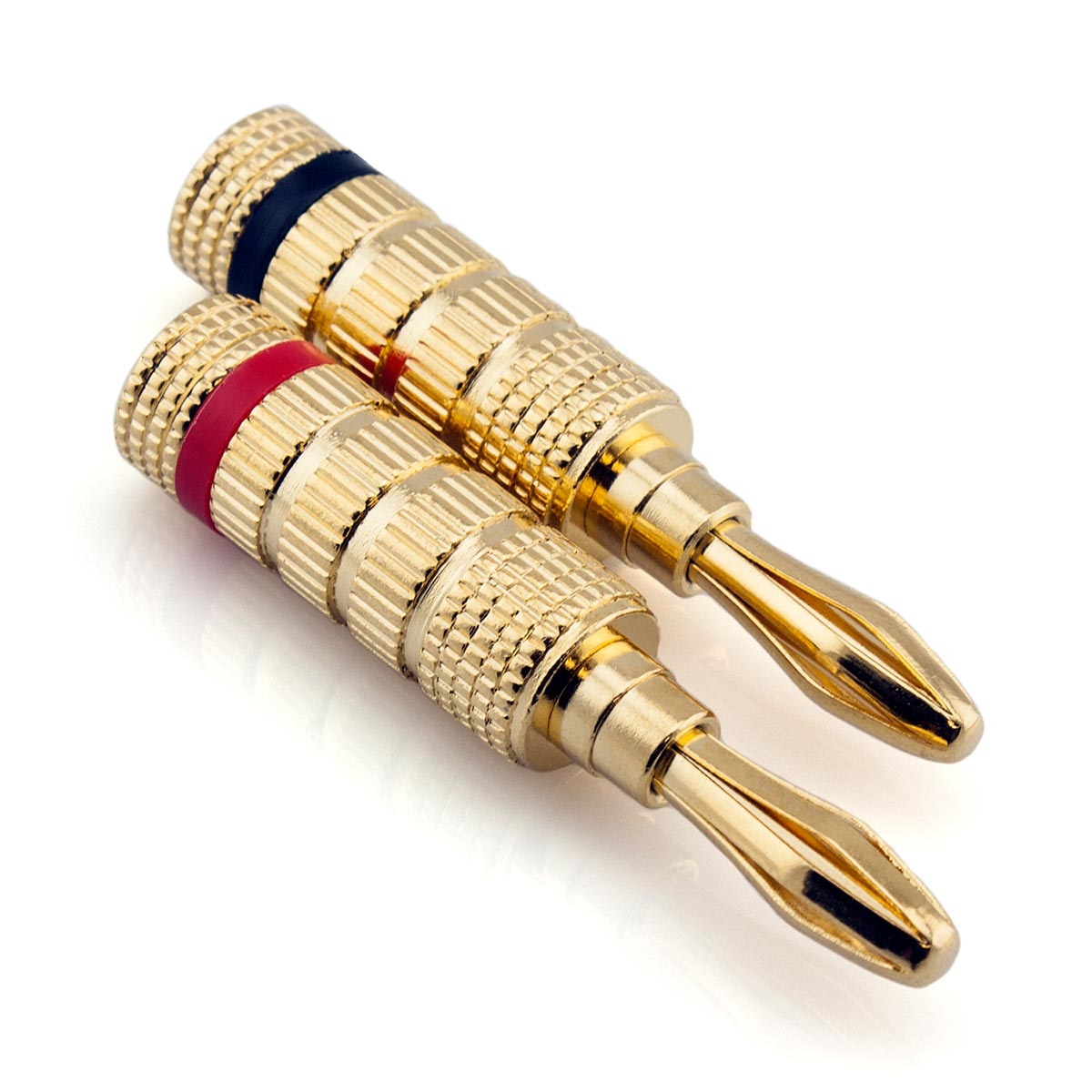
The problem with this banana is that the foil that forms the insertion pole (where there is that wavy part) is more fragile than the others and could bend under stress. That's why in the Magnus and Dedalus series we have designed BFA bananas with a central pin that guarantees this type of seal. Also because these bananas are made of copper and tellurium, which is softer than brass and therefore tends to bend. The only standard BFA bananas are those of the Primus, a series for which, however, we have provided an oversized foil to prevent bending.
The last and most common type of banana is the expansion banana, which uses a pivot system to provide a constant and precise seal (series Invictus). There are other, less common types of bananas, but these three are the most commonly used.
The cable Speaker Hi-Fi with spades
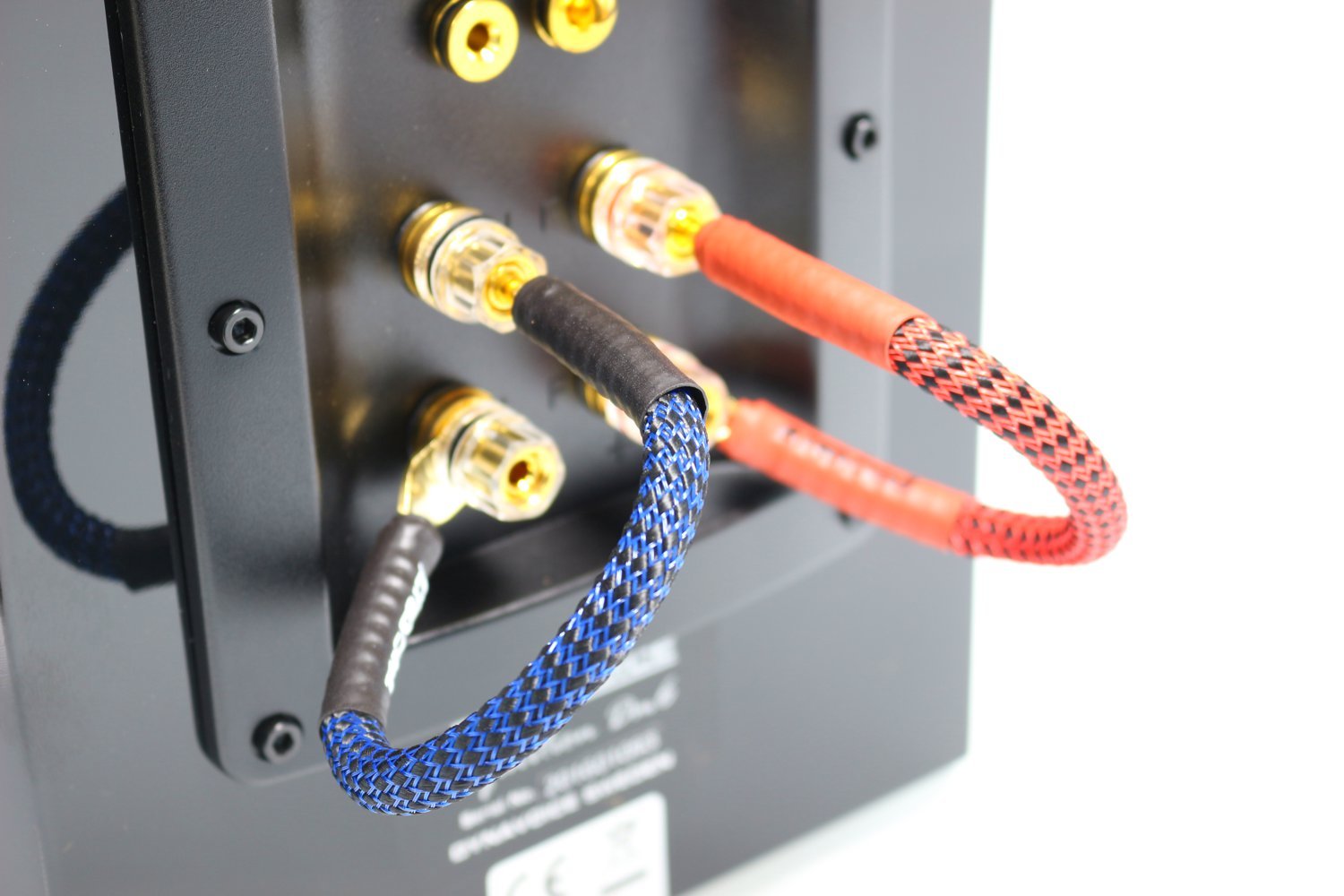
Termination with spades of a Hi-Fi speaker cable is perhaps the best possible compromise between convenience and performance. Despite this, the fork is much less popular and used for the termination of cables Speaker . Ricable still makes all cables with bananas, with the possibility of having them terminated, on one side or both sides, with spades, without price variations.
While the banana is universal for each clamp, as the hole is universal, for the fork the compatibility depends very much on the size of the clamp pin.
Ricable (but almost all spades on the market are like this) uses spades with a double overhang, which fits the vast majority of pins. The higher performance is guaranteed by a larger contact surface and thickness (in good spades ) of the connector body. The mechanical seal is practically identical to that of the banana, especially with modern speaker and amplifier terminals, which have a knurled part to prevent ungluing.
This solution is less convenient than "putting on and taking off", because every time you have to unclamp the clamp, as with stripped cable. However, inserting the fork is easier than with stripped cable and, above all, does not depend on the ratio of conductor to hole size. Sometimes it is possible to have small holes for stripped cable or large conductors. Another disadvantage of the fork is that many multichannel amplifiers do not accept it, whereas they always accept banana and stripped cable. An advantage of the fork over the banana, however, is that less space is needed behind the contact, because the cable goes immediately parallel to the device, whereas with the banana you need some space behind for the connector and the cable at the start.
The cable Speaker Hi-Fi stripped
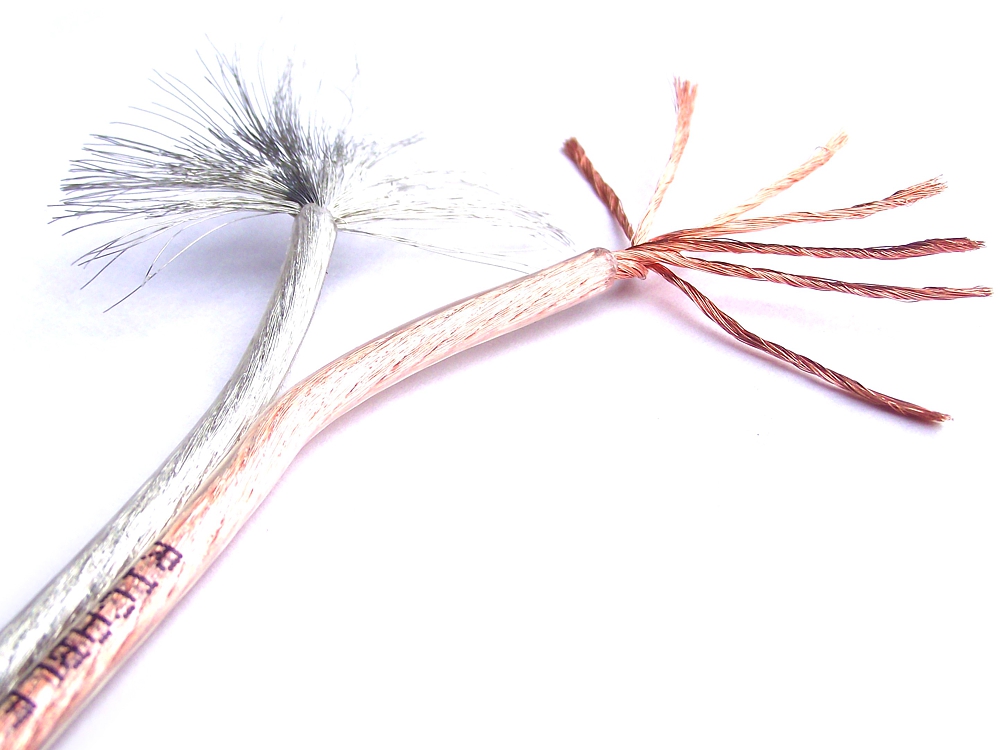
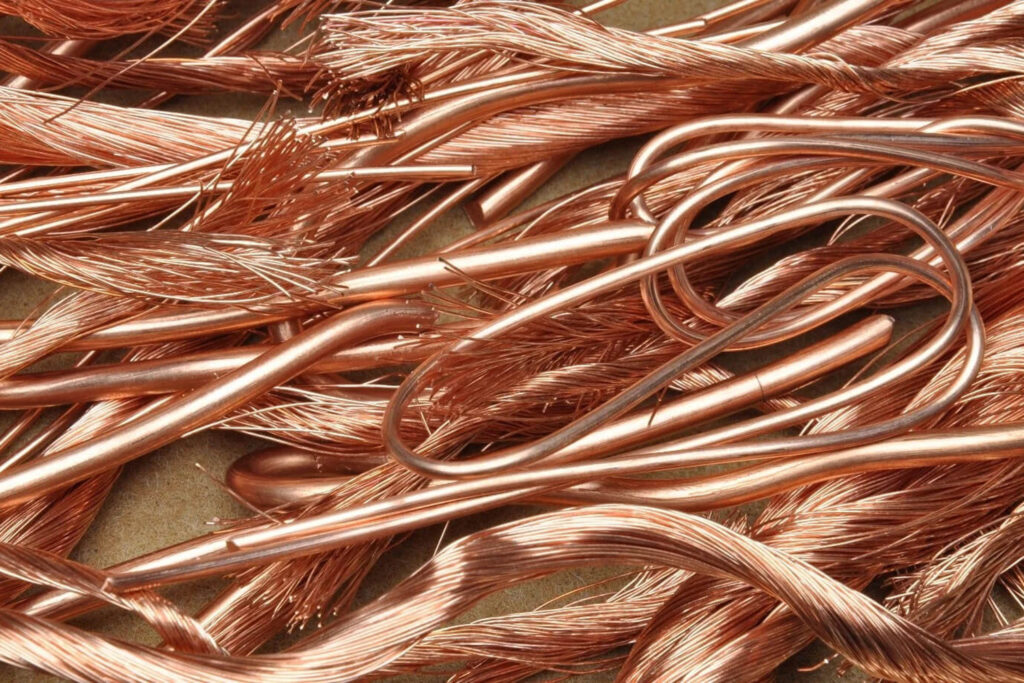
In terms ofperformance, the stripped cable is the best solution, because every element you add to the transmission of a signal tends to make it worse. So why are banana and spade connectors used, especially in the most valuable cables? For a simple reason, because copper conductors, and the higher their purity the more this condition occurs, tend to oxidise in a very short time and this drastically worsens the performance of the conduction, taking away all the advantage of not having a connector.
This can be remedied by tinning the stripped part, to buffer some of the oxidation, but it will never be the same as plating a connector. It also negates all the benefits of the stripped cable connection.
Usually stripped cables are used in moderate value connections, especially in Home Cinema, because the advancing oxidation affects less quality on Hi-End systems.
Caution: rather than using poor quality connectors, it is much better to use stripped cable, perhaps tinned. Quality connectors are always better than stripped cable in terms of advantages/disadvantages. Let's say that stripped cable is academically the best connection, but only in the short term, so it is not recommended for high-level connections. The values in the graph below refer to the medium and long term. Another disadvantage is the ease of use, because you have to remember to tighten the terminals from time to time and because, if you have to disconnect them, before connecting them again it is a good idea to cut off part of the cable and strip a new one, until you find a non-oxidised one.
Bananas, spades or stripped cable? All these considerations fall by the wayside when using bananas or spades of poor quality; in this case the sound quality would inevitably be so bad that we would recommend without any ifs or buts the use of the stripped cable. Ricable In addition to offering customised lengths, we also give our customers the option of choosing the termination, whether with bananas or spades. Just let us know in a note when you complete your purchase. For those who would like to use a stripped cable, we can only refer you to the following article to our Custom Divisionfor DIYers.






Excuse me, but I have a question: since the cable in bananas is tightened with screws and the whole thing is not vacuum-sealed, doesn't the copper oxidise in the same way as stripped copper?
Good morning Giulio, thank you for your question and forgive the delay, we had missed your comment. So, copper oxidizes everywhere, even in the cable, there is no such thing as eternally stainless copper; with time there is always oxidation. That said, the cable in the banana is definitely better protected. The banana we use in our cables Ricable, and the method of construction, as well as the quality of the materials, mean that the cable has a very high degree of protection, so oxidation will occur sooner or later, but at a very distant point in time and in a reduced manner.